
Pennsylvania Right-to-Know Law
Pennsylvania's main open-records statute is the Right-to-Know Law, Act 3 of 2008, found at 65 P.S. Section 67.101 and the sections that follow. It creates a presumption that records of Commonwealth and local agencies are public unless an exemption applies. The law sets the request, response, extension, denial, and appeal steps. You can read the full text on the Pennsylvania Right-to-Know Law page.
The official statute page is shown below.
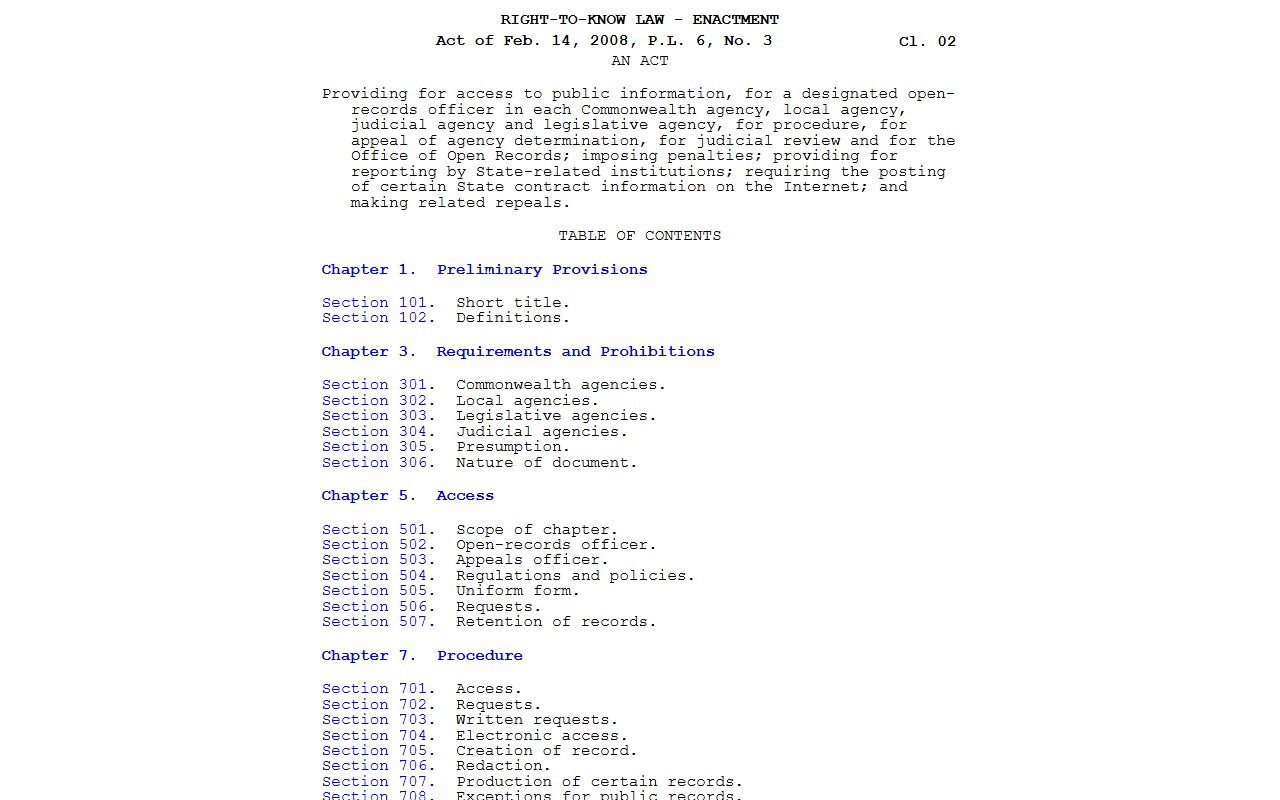
Anyone can file a request, and you do not have to say why you want a record. The key split is the type of record. A county budget or contract starts with the open-records presumption. A court docket or case file is governed by the courts instead, which the court records page covers in detail.
Court Records vs Administrative Records
The single most useful thing to know is which bucket your record falls into. Administrative records are the documents a county office creates to run government. Think contracts, budgets, payroll, meeting minutes, and policies. These follow the Right-to-Know Law, and the law presumes they are public unless an exemption applies. The presumption of access for local-agency records is set out at 65 P.S. Section 67.305 and Section 67.302.
Court case records are different. A docket sheet, a sentencing order, a divorce decree, or an estate file is created by the court, not by a county department. These follow the judiciary's public access policy and the court rules, not the open-records process. So a request for a county email might be a Right-to-Know request, while a request for a docket goes through the clerk or the state portal. When records are held by a contractor on the county's behalf, Section 67.506 still allows access in many cases. Sorting this out first prevents a denial on the wrong grounds.
What County Offices Maintain in Westmoreland County
Westmoreland County records are spread across several offices. Court case files sit with the Prothonotary and the Clerk of Courts. Estates and marriage licenses sit with the Register of Wills. Deeds and assessments sit with other county offices. Court Administration oversees the judicial side of county operations.
- Court dockets and case files (Prothonotary for civil, Clerk of Courts for criminal).
- Estate, guardianship, and marriage records (Register of Wills and Orphans' Court).
- Deeds, property, and assessment records.
- County administrative records like contracts, budgets, and minutes.
The county's Court Administration office is a useful starting point for the judicial side. Its page is shown below.
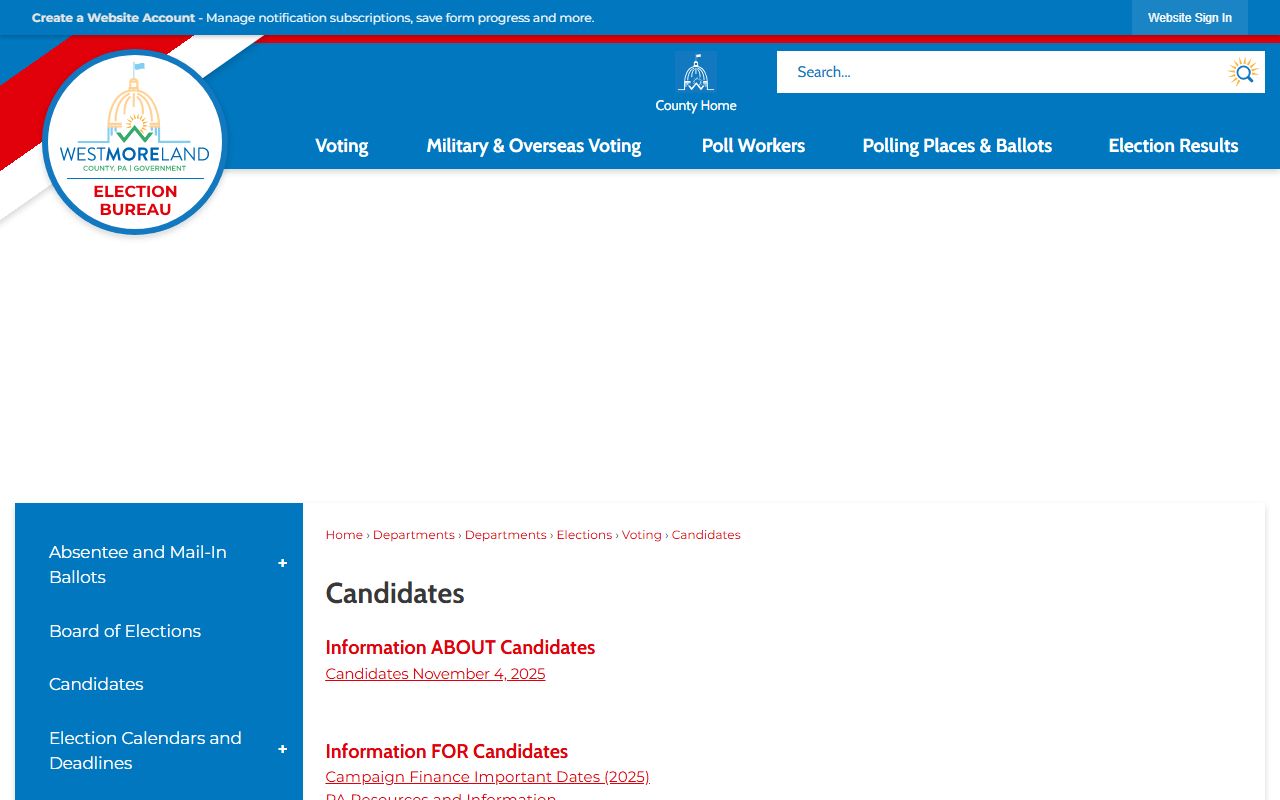
Match the record to the office before you file. A request sent to the wrong office slows everything down. The Court Administration page and the county record-search hub point you toward the right place.
How to File a Public Records Request in Westmoreland County
A Right-to-Know request goes to the agency's open-records officer. You can use the state's standard request form or your own written request. The Office of Open Records publishes the form and appeal materials. You can download them from the OOR forms page.
The OOR forms page is shown below.
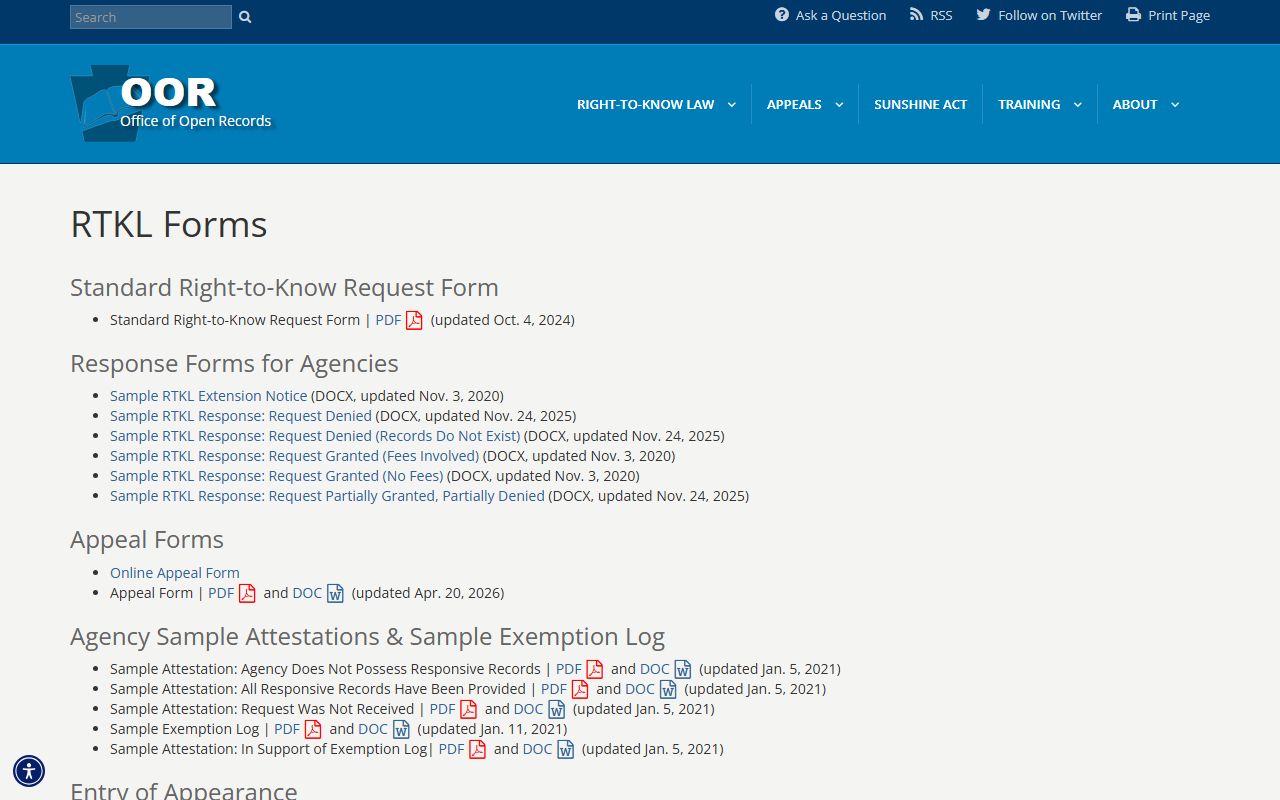
Keep the request clear and specific. A narrow, well-described request is easier to fill and less likely to be denied.
- Identify the right county office and its open-records officer.
- Describe the records you want with enough detail to find them.
- Submit the request in writing by mail, email, or the agency's process.
- Wait for the agency response within the statutory period.
- Pay any allowed fees and receive the records or a written explanation.
Note: Court case records are usually not handled as ordinary Right-to-Know requests, so use the clerk or UJS path for dockets and case files.
Public Records Request Form Fields
The Office of Open Records standard form asks for a small set of fields. Filling each one well helps the agency act fast.
| Field | Required | Notes |
|---|---|---|
| Requester name | Yes | Person or entity making the request. |
| Address / City / State / Zip | Yes | Standard mailing address. |
| Telephone / Email | No | Used for follow-up if provided. |
| Records requested | Yes | Identify the records with enough specificity. |
| Format requested | No | Electronic, paper, inspection, or certified copy. |
| Signature / date | Yes | Requester signs and dates the form. |
You file the form with the agency's open-records officer. For Westmoreland County judicial case records, do not use this route first unless you seek administrative court records.
Response Timelines
The Right-to-Know Law requires an agency to respond within the statutory period after it receives a written request. The law also allows a 30-day extension for reasons like legal review, redaction, or staffing limits, set out at 65 P.S. Section 67.902. A response can grant the request, deny it, or grant it in part.
Court records work differently. The county courts publish judge assignments and administration details, and case access follows the judiciary's policy rather than the agency response clock.
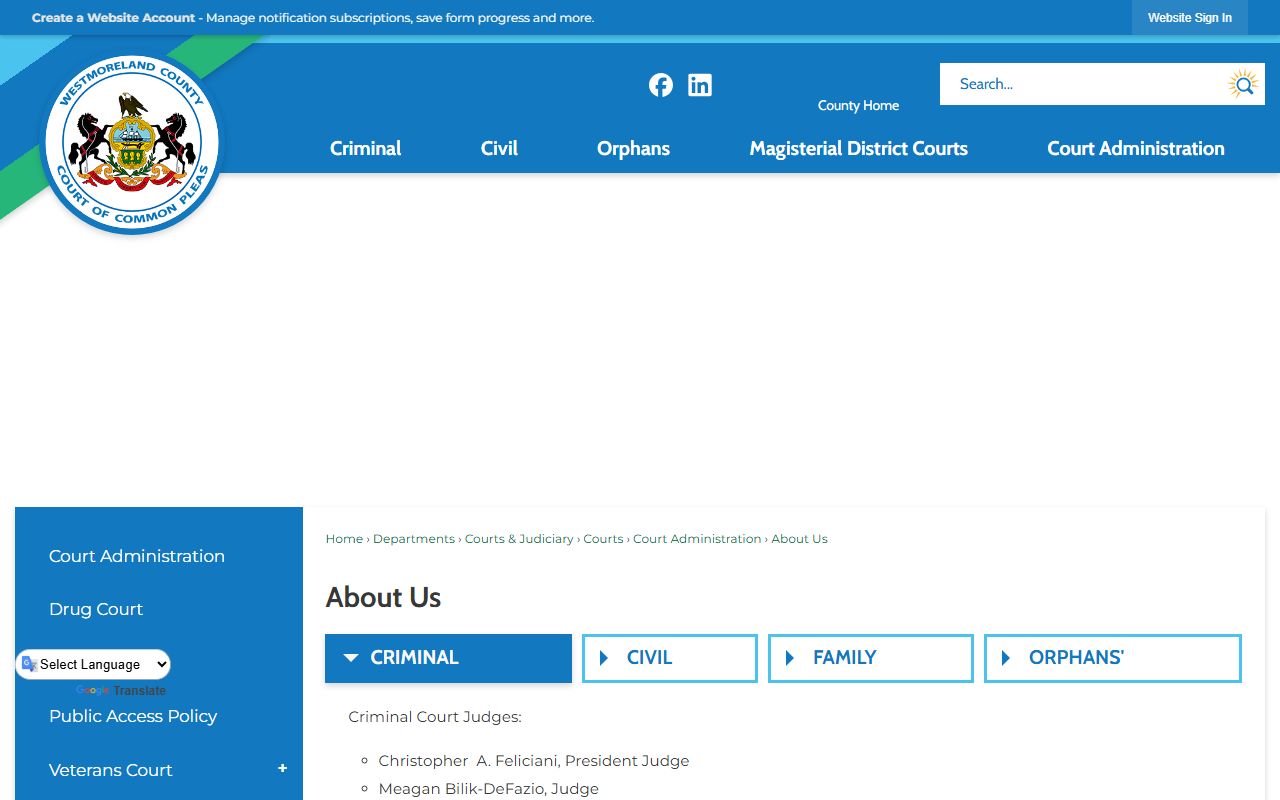
The county court About Us page lists current criminal, civil, family, and Orphans' Court judge groupings, which helps when you need to direct a court-related question.
If a deadline passes with no response, the law treats that silence as a denial in many cases. That matters because it starts your appeal clock. Keep a copy of the request, the date you sent it, and any reply. A clear paper trail protects your right to appeal and helps the appeals officer see what happened.
Westmoreland County Public Records Fees
Fees for Right-to-Know requests follow the Office of Open Records fee schedule rather than a number invented here. Agencies may charge for copies and certain costs within those limits. Confirm the current charge with the office before you commit to a large request.
| Item | Where Set / How to Confirm |
|---|---|
| Per-page copy | Within the OOR fee schedule; confirm with the office. |
| Certified copy | Set by the holding office; confirm before requesting. |
| Electronic format | May carry a cost within OOR limits. |
| Court case copies | Set by the Prothonotary or Clerk of Courts, not the OOR schedule. |
A fee waiver is sometimes possible. If copying costs are high, ask the office whether it can provide records electronically, which often costs less than paper. You can also narrow the request to the exact documents you need, since a tighter request usually means a smaller bill and a faster turnaround.
Records That Are Exempt
Not every record is public. The Right-to-Know Law lists exemptions at 65 P.S. Section 67.708. These include personal security records, criminal and noncriminal investigation materials, predecisional deliberations, trade secrets, and personal identification information like Social Security numbers.
Other categories sit outside the open-records process entirely. Juvenile records, adoption files, and sealed court matters are restricted under court rules and other statutes. An agency may also redact part of a record and release the rest. For the criminal side of what is public versus restricted, see the arrest records page.
If Your Request Is Denied
A denial is not the end. Under 65 P.S. Section 67.1101, you can appeal an agency denial to the Office of Open Records or the proper appeals officer. The appeal must be filed within the time the law allows, and you should attach the request and the denial.
Court records follow a separate path. For a sealed or limited-access case, you may need a motion in the court of record rather than an OOR appeal. The clerk can explain whether a redacted copy is available or whether court permission is required.
An appeal does not need a lawyer, though one can help with a complex case. State your reasons plainly and point to the part of the law that supports access. The appeals officer reviews the agency's grounds and can order release, uphold the denial, or order partial release with redactions.